


Industrial & Special Environment
By hqt
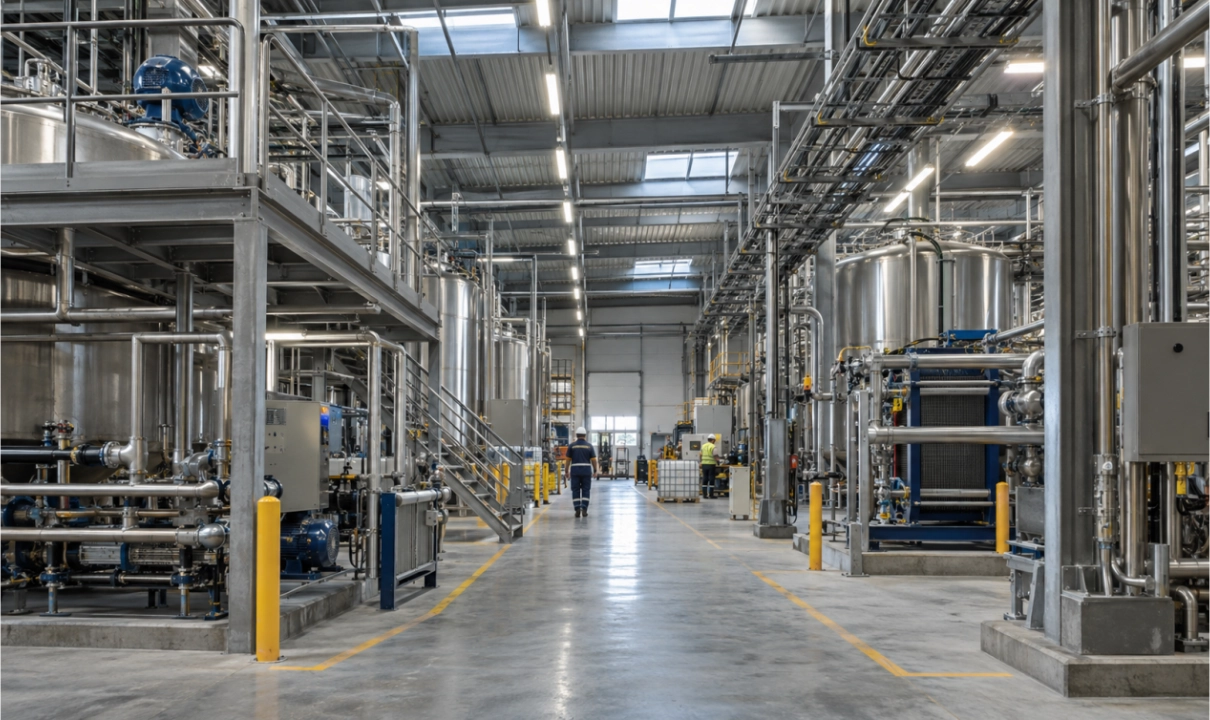
Industrial and special environments demand more from lighting than ordinary commercial spaces. High temperatures, low temperatures, dust, moisture, corrosion, vibration, explosion risks, and cleanroom requirements can occur individually or together. Safety and reliability come first; comfort and energy efficiency follow. If a fixture fails, it can affect production, inspections, and even safety. VOLTERRA provides durable, well-protected, and easy-to-maintain LED solutions for these environments.
Typical Applications
Industrial and special environments include factory floors, warehouses, logistics centers, cold storage, food processing, pharmaceutical cleanrooms, laboratories, chemical plants, spray and welding workshops, gas stations, mining, tunnels, wastewater treatment, and energy facilities. Requirements vary widely: some areas need explosion-proof fixtures, some need corrosion resistance, some must be dust-free and sterile, and others operate at extreme temperatures.
Design Principles
Safety comes first. Explosion-proof areas must use compliant fixtures. Wet and corrosive areas need proper IP ratings and materials. Clean areas must avoid dust accumulation and contamination. Reliability is next: many industrial sites run continuously, and maintenance is difficult, so fixture life and stability matter. Light should be even, without shadows or dark spots, to reduce inspection and operating risks. Glare control is important, especially in high-bay, metalworking, and precision task areas. Energy efficiency and intelligent control come last, using zoning, sensing, and dimming to reduce long-term operating costs.
Key Selection Considerations
- Ingress protection: Choose IP ratings based on dust, moisture, and washdown needs; consider IK impact resistance where required.
- Explosion-proof certification: Explosive gas or dust environments require fixtures that meet local standards.
- Materials and corrosion resistance: Chemical plants, coastal areas, and wastewater treatment suit stainless steel, anti-corrosion coatings, or engineering plastics.
- Wide temperature performance: Cold storage and high-temperature workshops require confirmed operating temperature ranges.
- Vibration resistance and installation: Vibration-heavy areas need anti-vibration construction and accessible mounting.
- Light quality: Precision work, quality inspection, and food processing need high CRI and stable color temperature.
- Emergency lighting: Configure to code, with self-testing and fault reporting where possible.
Lighting Approaches by Area
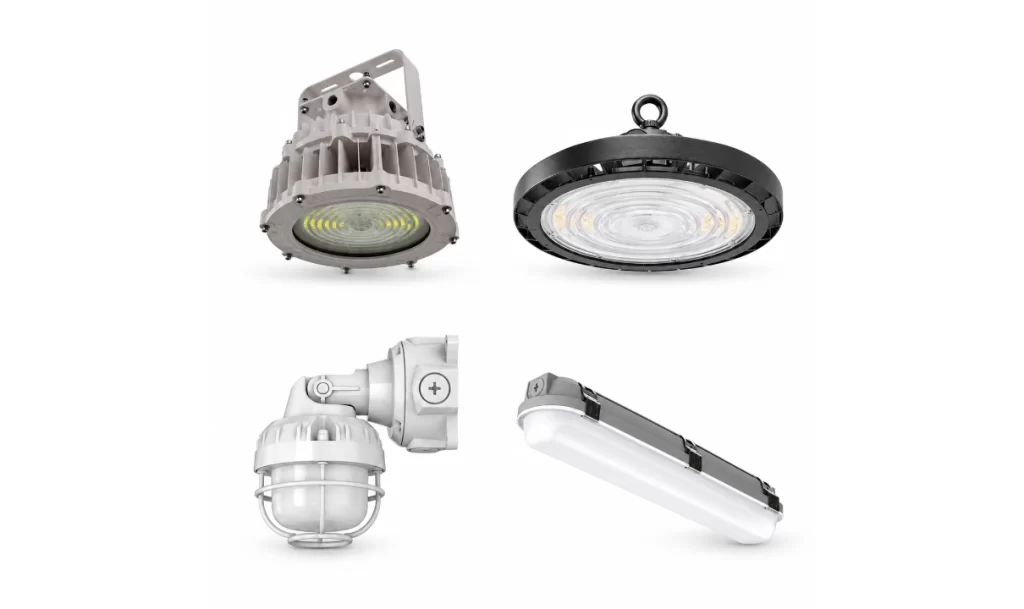
High-bay workshops suit high-bay and industrial fixtures with high efficacy, uniformity, and low glare. Warehouses and logistics centers can use linear or high-bay fixtures with aisle sensing. Cold storage needs low-temperature fixtures that start reliably and resist lumen depreciation. Cleanrooms suit sealed clean panels and linear lights that are easy to clean and do not collect dust. Explosion-proof areas must use explosion-proof fixtures selected by hazardous zone. Corrosive areas suit tri-proof and corrosion-resistant fixtures. Food processing areas commonly use stainless steel, IP66 or higher, washdown-rated fixtures. Loading areas, outdoor yards, and tank farms suit floodlights and tri-proof fixtures for safety and weather resistance.
Intelligent Control, Project Support, and Solution Value
In industrial and special environments, intelligent control is not about gimmicks; it is about safety, energy savings, and less maintenance. Warehouse aisles, stairwells, and low-use areas can use occupancy sensing. High-bay areas can be dimmed by zone. Emergency luminaires can self-test periodically. VOLTERRA works with owners, design institutes, general contractors, and operators to advance solutions based on project requirements. Our services cover product selection, supplier coordination, technical documentation, procurement support, installation guidance, testing and commissioning, and after-sales service. We focus not only on individual fixtures but on whether the whole system can operate reliably in harsh environments, be maintained easily, and meet budget and schedule. Good industrial lighting helps workers see clearly, move safely, and work accurately, while reducing energy costs and downtime risks.

