


Sports & Venues
By hqt
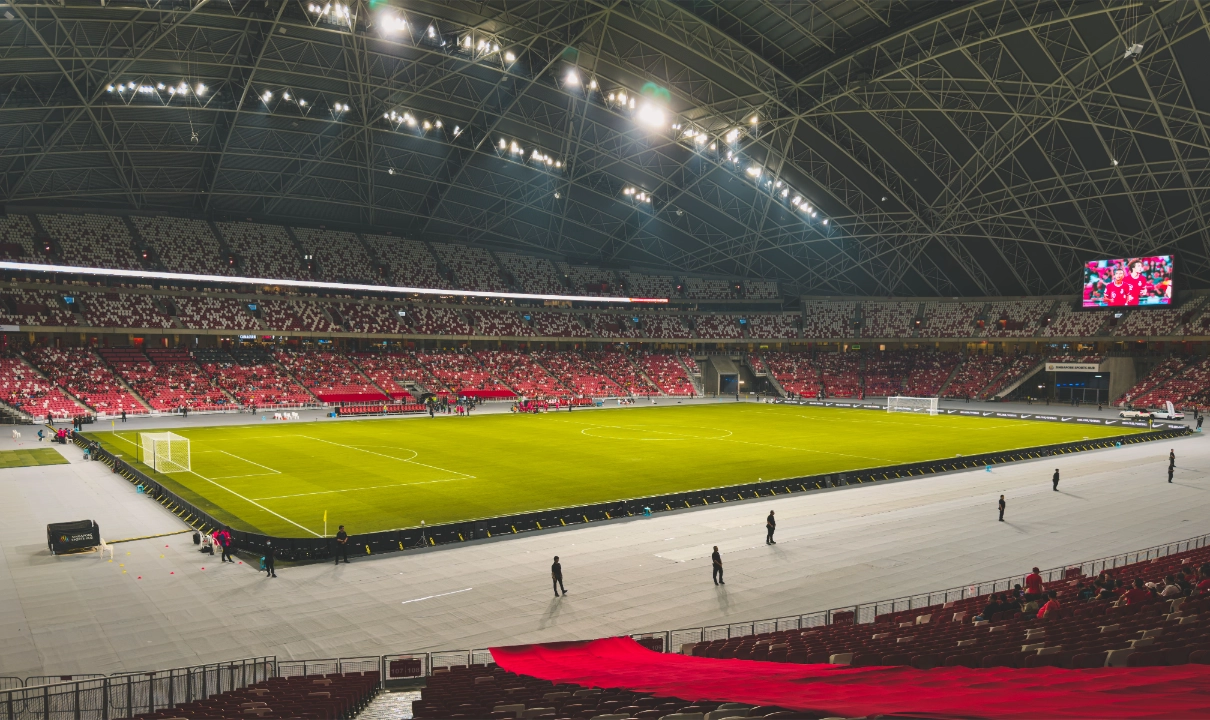
Sports and venue lighting is different from industrial, architectural, or transport lighting. Industry focuses on protection, architecture on nightscape, and transport on safety and continuity, while sports venues focus on “the moment on the field.” Athletes need to judge the ball’s trajectory, referees need to see boundaries and fouls, spectators need to follow the pace of the game, and cameras need clean, stable images. Once the lights are on, whether the game can proceed normally, whether the broadcast footage is usable, and whether the spectator experience is good all depend directly on lighting. Illuminance is only the entry ticket; what really sets solutions apart is uniformity, glare control, flicker, vertical illuminance, color rendering, and scene-switching capability.
Competition Level Determines Lighting Standards
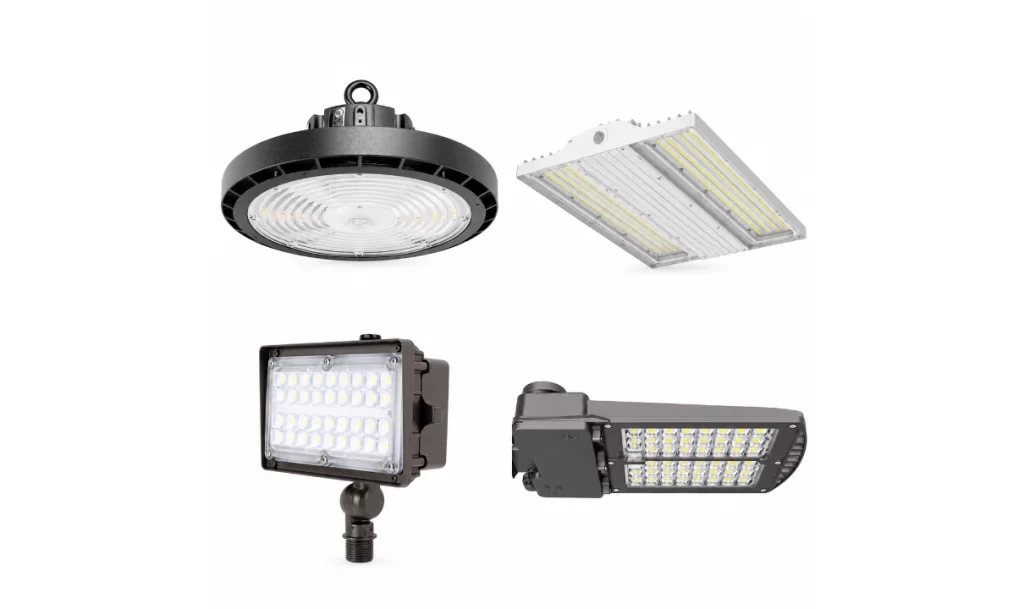
Sports lighting cannot be one-size-fits-all. Training venues, amateur competitions, professional events, and television broadcasts have completely different requirements. Training and fitness spaces care more about comfort, energy efficiency, and low maintenance. Amateur competitions need basic uniformity and glare control. Professional events must meet the visual needs of referees and athletes. Broadcast-grade venues must additionally satisfy cameras’ strict demands for flicker, color temperature consistency, and vertical illuminance. Within the same venue, different areas and different operating modes also have different standards. The main field, spectator seating, media areas, corridors, and support spaces need to be treated separately.
Broadcast Is the Highest Threshold
Broadcast-grade lighting is the most demanding level in sports lighting. Cameras are extremely sensitive to flicker. Flicker invisible to the naked eye can become banding or brightness fluctuations in high-speed cameras and slow-motion replays. Inconsistent color temperature causes color shifts. Insufficient vertical illuminance makes players’ faces and jerseys look dark. Poor color rendering distorts turf, jerseys, and advertising boards. Broadcast venues therefore usually require flicker-free drivers, high refresh rates, stable color temperature, high color rendering, and sufficient vertical illuminance. Pole positions, aiming angles, and beam angles must also coordinate with camera positions to avoid glare shining directly into lenses. Broadcast lighting is not just about illuminating the field; it is about keeping the picture clean, stable, and suitable for long broadcasts.
Four Visual Needs Must Be Met at the Same Time
Sports lighting serves four “audiences” at once: athletes, referees, on-site spectators, and cameras. Athletes need to see the ball, boundaries, teammates, and opponents without direct glare interfering with their line of sight. Referees need a clear environment for decisions, especially on sidelines, baselines, and fouls. Spectators need comfortable viewing; seating areas should not be too dark or hit by direct light from the field. Cameras need stable light output and uniform vertical illuminance. These four needs sometimes conflict. For example, increasing field illuminance may increase glare in spectator seating, and boosting vertical illuminance may affect athletes’ sightlines. Good sports lighting balances these demands.
Different Venues Have Different Priorities
Stadiums, athletics tracks, and football fields mainly use high-mast floodlights, with priority on uniformity, glare control, and broadcast compatibility. Basketball, badminton, and volleyball halls often use catwalk luminaires and panels, emphasizing low glare, high uniformity, and fast response. Swimming pools require special attention to moisture resistance, corrosion resistance, and glare control, because water reflections can easily disturb athletes and cameras. Tennis and table tennis halls have high requirements for background brightness and glare, so fixture positions and shielding angles must be carefully designed. Esports venues and multi-purpose halls place more emphasis on scene switching, audio-visual synchronization, and low-latency control. Gyms, training bases, and community sports spaces can lower competition standards appropriately and focus on comfort, energy efficiency, and durability.
Multi-Purpose Operation and Scene Switching
Modern venues rarely host only one type of event. The same field may be used for training in the morning, competition in the afternoon, a performance in the evening, and an exhibition on the weekend. The lighting system must switch scenes quickly. Competition mode, training mode, performance mode, cleaning mode, and emergency mode can be recalled with one touch. Performances and opening ceremonies also require audio-visual synchronization, dynamic effects, and zoned control. LED lighting combined with DMX and control systems can achieve color changes, chasing, fading, and synchronization with music. Lighting for multi-purpose venues is not just about illuminating the field; it supports operators in using the space flexibly.
VOLTERRA Project Support
Sports and venue lighting involves owners, design institutes, general contractors, event operators, broadcast teams, and venue managers, making coordination challenging. VOLTERRA works with all parties based on project requirements. Our services cover product selection, supplier coordination, technical documentation, procurement support, installation guidance, testing and commissioning, and after-sales service. We focus not only on individual fixtures but on whether the whole system can meet competition standards, satisfy broadcast requirements, support multi-purpose operation, be maintained easily, and meet budget and schedule. From training halls to professional stadiums, from community fitness spaces to broadcast-grade venues, we can provide coordinated LED lighting solutions according to project positioning.
Good sports and venue lighting helps athletes perform consistently, referees judge accurately, spectators watch comfortably, and broadcasts look clean. It also helps operators reduce energy and maintenance costs and supports multi-purpose venue operation.

