


Transport & Infrastructure
By hqt

Transport and infrastructure lighting is not a single-point effect. It is a system. Airports, railway stations, metro systems, tunnels, bridges, highways, ports, and bus hubs often operate around the clock with dense passenger and vehicle flows. If lighting fails, the impact can be significant. These projects prioritize safety, continuity, uniformity, durability, and manageability over the look of any single fixture. VOLTERRA puts codes, emergency lighting, centralized control, and maintenance efficiency first.
Typical Applications
Airport terminals, railway stations, metro stations, bus hubs, tunnels, bridges, highways, urban roads, ports, docks, parking facilities, utility tunnels, toll stations, and service areas.
Design Principles
Safety comes first. Illuminance, uniformity, glare control, and emergency egress must meet codes, with no dark zones or abrupt brightness changes. Reliability is next: fixtures must run for long hours and resist vibration, dust, water, salt spray, temperature swings, and lightning. Guidance must be clear so passengers and vehicles can quickly identify directions, entrances, exits, and hazards. System integration through zoning, dimming, sensing, and centralized management helps reduce long-term operating costs. Maintainability is also critical—high-mast, tunnel, and bridge fixtures need safe access for inspection and replacement.
Key Selection Considerations
- Light quality and uniformity: Avoid flicker, zebra effects, and glare, especially in tunnels and roads.
- Protection and weather resistance: Use suitable IP/IK ratings and anti-corrosion materials for outdoor, tunnel, port, and bridge areas.
- Vibration resistance and reliability: Choose anti-vibration construction for bridges, platforms, and vibration-prone areas.
- Emergency lighting: Configure egress, standby, and self-test functions to code.
- Control and integration: Support dimming, centralized management, fault alarms, and integration with other systems.
- Maintenance access: Ensure safe access for high-mast, tunnel, and bridge fixtures.
- Color temperature and rendering: Comfort in concourses and platforms; clarity on roads.
Lighting Approaches by Area
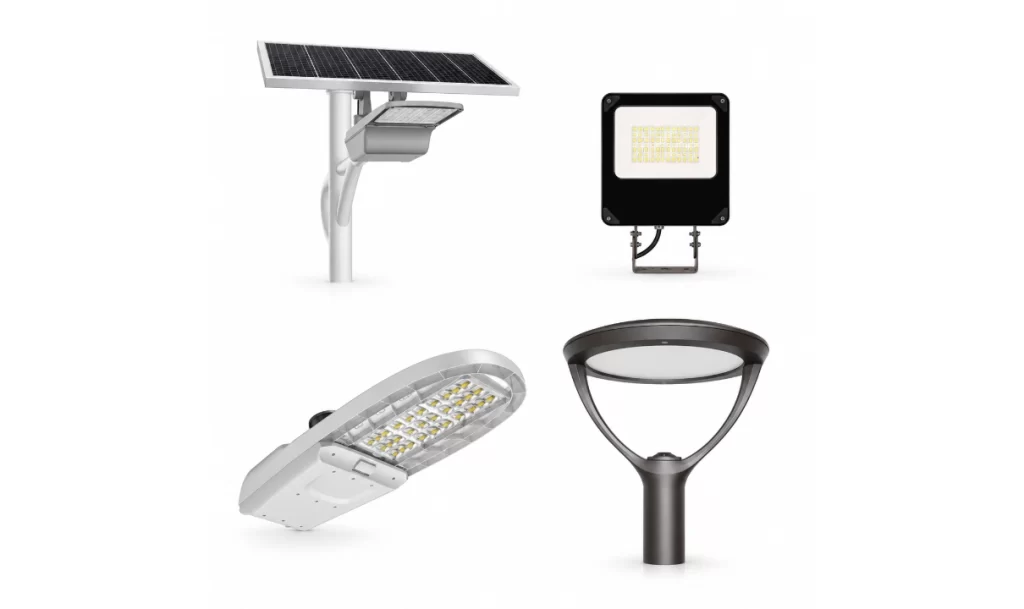
Airport terminals and railway station halls suit linear lights, panels, and downlights for uniformity, comfort, and wayfinding. Platforms and corridors need continuous lighting with emergency egress. Metro stations require low glare, easy cleaning, and vibration resistance. Tunnels need professional tunnel luminaires designed for threshold, transition, interior, and exit zones. Bridges and roads suit street lights, floodlights, and high-mast lights with glare and spill light control. Ports and docks need high-mast and anti-corrosion floodlights for humid, salt-laden environments. Parking and underground spaces can use occupancy-sensing and tri-proof fixtures for on-demand lighting. Utility tunnels and toll stations need reliable, easy-to-maintain lighting with centralized monitoring.
Intelligent Control, Project Support, and Solution Value
Control focuses on safety, energy savings, and centralized management. Roads and tunnels can dim based on traffic, time, and weather. Platforms and corridors can be zoned. Parking can use occupancy sensing. Emergency luminaires can self-test and report faults. Systems can integrate with building management, traffic monitoring, or operations platforms. VOLTERRA works with owners, design institutes, general contractors, and operators based on project requirements. Our services cover product selection, supplier coordination, technical documentation, procurement support, installation guidance, testing and commissioning, and after-sales service. We focus not only on individual fixtures but on whether the whole system can operate reliably, be maintained easily, and meet budget, code, and schedule requirements. Good transport and infrastructure lighting helps passengers and vehicles see clearly and move safely, while helping operators reduce energy and maintenance costs and improve overall operating efficiency.

